General Practice, Dermatology, and Pedagogy
Our research group works to improve the quality of general veterinary practice—where recommendations for prevention, diagnosis, and treatment strike a balance between evidence-based knowledge, pet owners’ expectations, and their financial realities. We are therefore conducting research on how veterinarians can make clinical decisions that are professionally sound and, at the same time, realistic in practice.
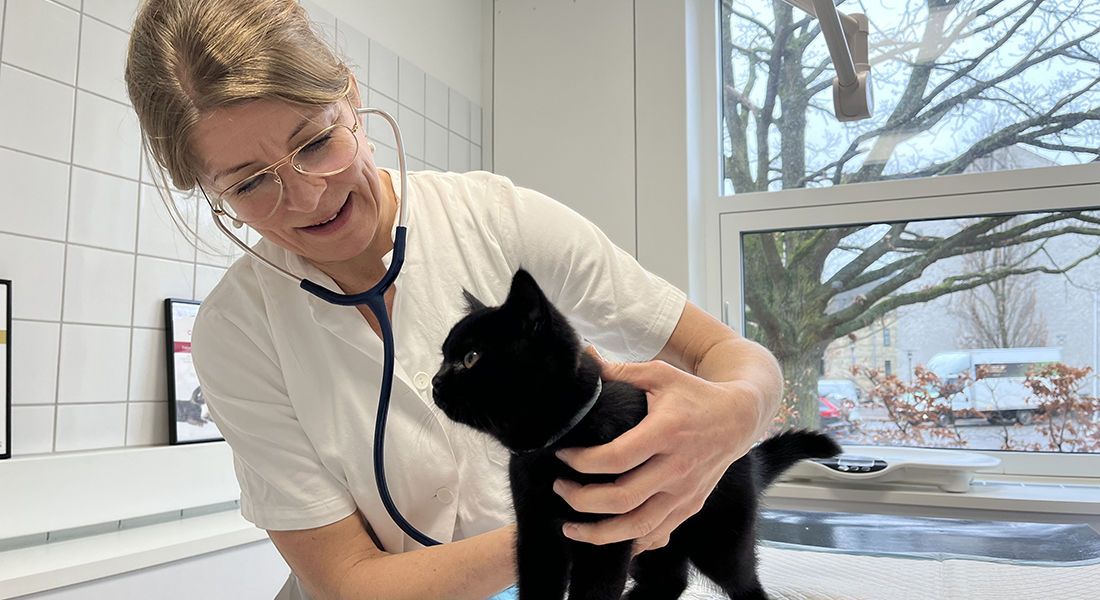
Our research goals are closely linked to the education of veterinary students: We aim to equip future veterinarians to thrive in a complex reality where interacting with animals and their owners requires professionalism, empathy, and pragmatism. It’s about being able to navigate clinical dilemmas and make responsible decisions that align with both the patient’s needs and the owner’s resources.
We collaborate with veterinarians and researchers in both Denmark and abroad to conduct practice-oriented research that combines everyday clinical practice, education, and societal perspectives.
Through these collaborations, we ensure that our research findings are not merely theoretical but can also be applied in practice—for the benefit of veterinarians, animals, and pet owners alike.
This interdisciplinary approach enables us to develop solutions that work in many different contexts and across national borders.

We are investigating how, in practice, we can use antibiotics most responsibly and balance the expected benefits against the risks of developing resistance and other side effects.
Our aim is to generate knowledge that makes the use of antibiotics more targeted and responsible. This is to ensure that the beneficial effects of treatment are maintained, whilst minimising the risk of developing resistance and other side effects.
Ongoing projects
- Optimal duration of treatment for urinary tract infections in dogs
- Characteristics of animals and bacteria in subclinical bacteriuria
- Treatment of wound infections (post-operative, pyoderma)
- National and international antibiotic guidelines
Previous projects
- Prophylactic antibiotic treatment during surgery
- Investigation of the limits of decision-making
- Treatment of pyometra

We investigate the health and quality of life of dogs, cats and rabbits, as well as the effectiveness of our vaccines.
Our aim is to build up a greater understanding of the protective effect of vaccines and key indicators of health and quality of life. We do this across different animal species and populations with specific physiological and environmental conditions. In this way, we strengthen our knowledge and our ability to provide targeted disease prevention and rational diagnostics for, amongst others, older dogs and Greenlandic sled dogs.
Ongoing projects
- Health and vaccination coverage in Arctic dogs (QimmeqHealth)
- Duration of vaccine efficacy in dogs
- Healthy ageing in dogs and cats
- Ear disorders in rabbits
- Allergies in cats
Previous projects
- Vaccination titre testing in the clinic
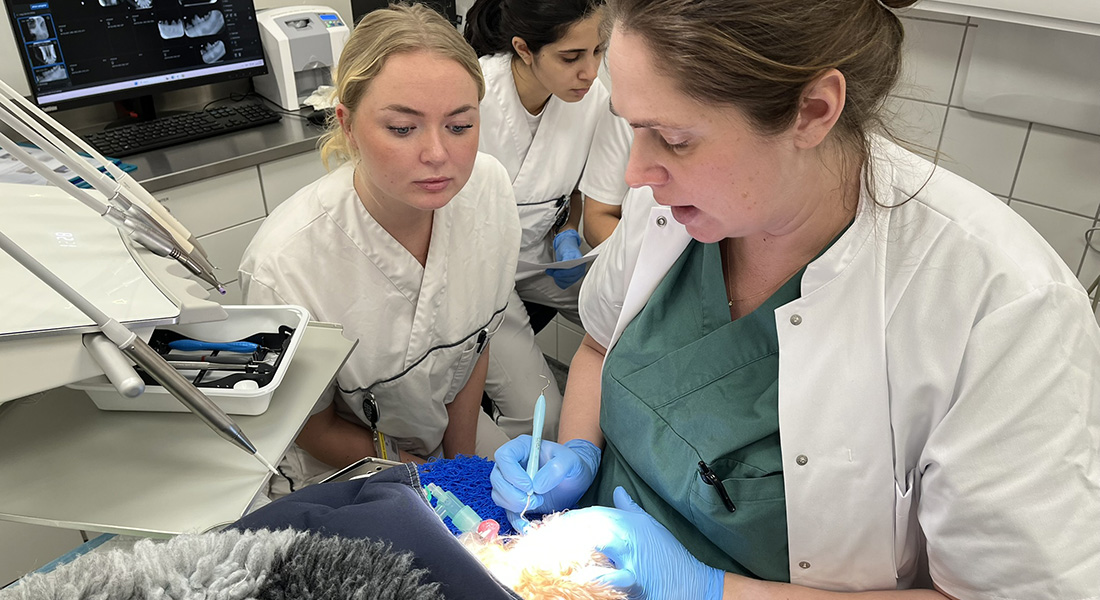
We are investigating how best to teach practical skills, clinical decision-making and practice-oriented professional competence.
Our aim is to generate evidence for the most effective teaching and learning methods for developing practical skills, clinical decision-making and practice-oriented professional competence. At the same time, we are investigating how safe and supportive learning environments best promote students’ wellbeing, learning outcomes and progression towards defined ‘Day 1’ competencies. The aim is to facilitate a smooth and confident transition from veterinary studies to clinical practice, thereby enhancing the quality of veterinary education.
Ongoing projects
- Day-1 competencies for practising vets treating dogs, cats and horses
- Practical skills training
- Virtual learning environments
- Use of euthanised animals in teaching
Previous projects
- Simulation of gastric torsion surgery
- Simulation of anaesthesia monitoring
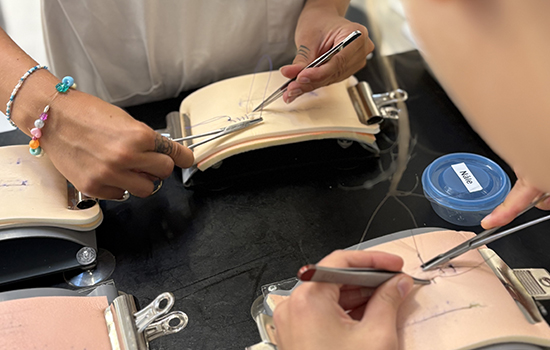
Potential supervisors:
Tina Møller Sørensen (tims@sund.ku.dk)
- Antibiotic use
- Urinary tract infections
- Vaccine serology
- Teaching methods
- Simulation training
- Systematic reviews
Thomas Eriksen (ter@sund.ku.dk)
- Surgical conditions
- Clinical decisions
Mette Schjærff (mesc@sund.ku.dk)
- Skin diseases
Anne Marie Fog Sandal (amfl@sund.ku.dk)
- Medical conditions
Researchers/group members
| Name | Title | Phone | |
|---|---|---|---|
| Search in Name | Search in Title | Search in Phone | |
| Anne Marie Fog Sandal | Teaching Associate Professor | +4535333943 | |
| Betina Posgaard | Senior Veterinarian | +4535337707 | |
| Camilla Elberg Nielsen | Senior Veterinarian | ||
| Ditte Erika Leth Vasby | Assistant Professor | +4535331774 | |
| Emilie Ulrikka Andersen-Ranberg | Assistant Professor | +4535336120 | |
| Mette Schjærff | Teaching Associate Professor | +4535332930 | |
| Mette Lybek Rueløkke | Senior Veterinarian | ||
| Rikke Langebæk | Associate Professor Emerita | +4540223991 | |
| Tina Møller Sørensen | Associate Professor | ||
| Tine Hvass Nielsen | Research Assistant | +4535326327 |
Research group leader
Tina Møller Sørensen
Veterinarian, Associate Professor
Dyrlægevej 16, building 1-71
1870 Frederiksberg C
Telefon: +45 23 64 94 96
Email: tims@sund.ku.dk