
Anesthesiology, Emergency Medicine, and Internal Medicine
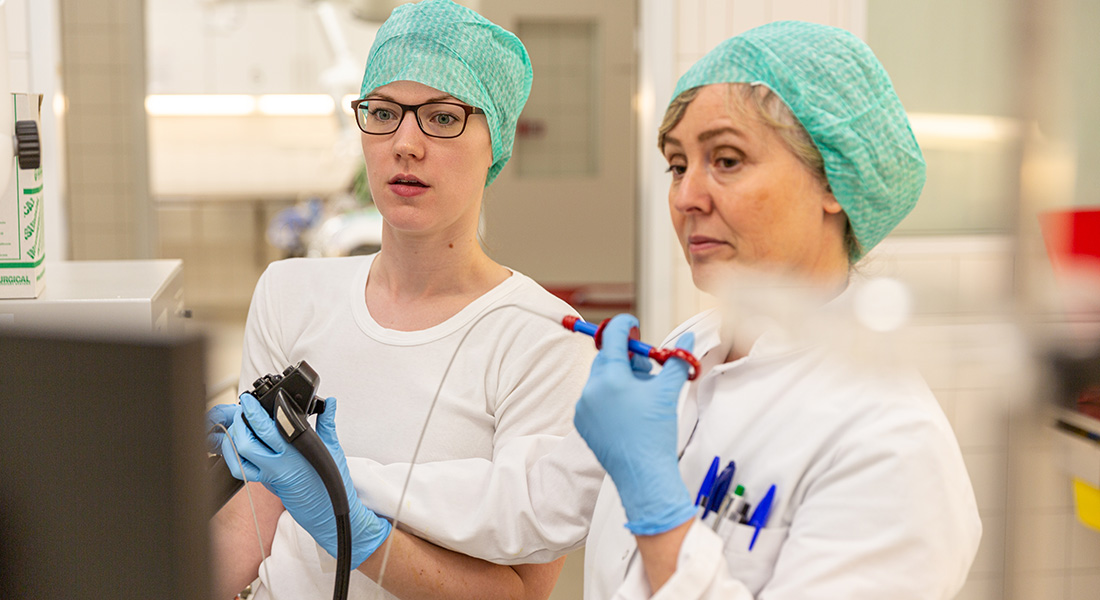
Our research group is engaged in research and teaching in the fields of anesthesiology, emergency medicine, and internal medicine for companion animals. We strive to generate knowledge that can advance disease control and animal welfare, with a focus on rapid and minimally invasive diagnostics, disease and pain management, and prognosis for critically and chronically ill patients.
The research group also works on evidence synthesis and evidence-based treatment guidelines under the auspices of the International Veterinary Evidence-based Guidelines Center (IVEG – University of Copenhagen).
Within our fields of research, we focus on gaining an understanding of the underlying pathophysiology of emergency medical and internal medical disease processes, evaluating potential diagnostic and prognostic biomarkers for patients with these conditions, and optimising their treatment. In anaesthesiology, we also work on optimising patient care pathways, with our main areas of focus being patient safety, effective, individually tailored anaesthesia protocols and advanced multimodal pain management.
The three disciplines—anesthesiology, emergency medicine, and internal medicine—collaborate closely in clinical practice and, as a result, also have overlapping research activities. We also collaborate with both national and international researchers, and the majority of our research findings are presented and published internationally.
We teach using an evidence-based approach that incorporates the latest knowledge and involve veterinary students in both our clinical and research work.
The research area of hematology, hemostasis, and transfusion medicine deals with blood disorders, both in relation to blood cells and blood protein components. Research is most often conducted in collaboration with the research group for veterinary clinical pathology and focuses on the characterisation of disease phenotypes and clinical treatment strategies.
Current projects:
- Characterisation of the hemostatic profile in cats with heart disease and arterial thrombi
- Prevalence and prognostic factors for immune-mediated hemolytic anemia in dogs in Denmark
- The pathobiological understanding of immune thrombocytopenia in dogs
- Development, identification, and therapeutic management of hemostatic dysfunction in dogs with Angiostrongylus vasorum
- In vitro effect of etamsylate on comprehensive hemostatic tests in dogs
- Evaluation of new commercial kits for compatibility testing in dogs and cats requiring blood transfusions
We are conducting ongoing research into the use of biomarkers for clinical applications in diagnostics, treatment monitoring, or prognosis for critically ill dogs and cats, including inflammatory markers and markers of heart muscle damage.
Current projects:
- The prognostic significance of cardiac and endothelial markers for mortality in critically ill cats
- Serum protein electrophoresis as a diagnostic marker in dogs with inflammatory disease
- Use of venous blood gas analysis to assess lung function in dogs using venous-to-arterial conversion
The research area of anaesthesiology focuses on optimising the anaesthetic management of companion animals in connection with surgical operations or diagnostic procedures. The focus is therefore on the entire peri-anaesthetic process, including pain management. Research is often carried out in collaboration with other departments, and there is a natural collaboration with surgical departments, emergency medicine and internal medicine.
Ongoing projects:
- The use of feline pheromones as an anxiety- and stress-reducing measure during clinical examinations of cats
- Subcutaneous ketamine as supplementary analgesia for dogs with osteoarthritis (OA)
- Use of venous blood gas analysis to assess lung function in dogs using venous-to-arterial conversion
- Randomised, double-blind pilot study conducted in collaboration with an external company on a new anaesthesia concept focusing on behaviour and the anaesthesia process
- Clients’ experiences of their pets’ recovery following outpatient anaesthesia/sedation
- Enhanced recovery after surgery (ERAS) in dogs
- Validation of assessment tools for use in evaluating pain in dogs with OA
- Optimisation of the anaesthetic management of dogs in field conditions in Kenya
This area of research covers both acute and chronic gastrointestinal diseases.
Ongoing projects:
- Faecal transplantation in dogs
- Acute diarrhoea in dogs: Treatments and prognosis
Potential supervisors:
Lisbeth Rem Jessen (lrmj@sund.ku.dk)
- Antibiotic use
- Urinary tract infections
- Internal medicine
Nana Dupont (nana.hee.dupont@sund.ku.dk)
- Gastroenterology
- Internal medicine
Frida Moberg (frida.moberg@sund.ku.dk)
- Hepatology
- Urology
- Internal medicine
Rebecca Langhorn (rel@sund.ku.dk)
- Haematology, haemostasis and transfusion medicine
- Emergency medicine
- Internal medicine
Regitze Andersen (regitze.andersen@sund.ku.dk)
- Emergency medicine
Helle Harding Poulsen (hhp@sund.ku.dk)
- Anaesthesia
- Analgesia
Kathrine Højte Dahl (kathrinehd@sund.ku.dk)
- Anaesthesia
- Analgesia
Emma Hoeberg (emma.hoeberg@sund.ku.dk)
- Anaesthesia
- Analgesia
Contact
Research group leader
Lisbeth Rem Jessen
Associate Professor
Email: lrmj@sund.ku.dk
Telephone: +45 35 33 09 52