
Research group leader: Tina Holberg Pihl
Medicine, Surgery, Reproduction - Large Animals
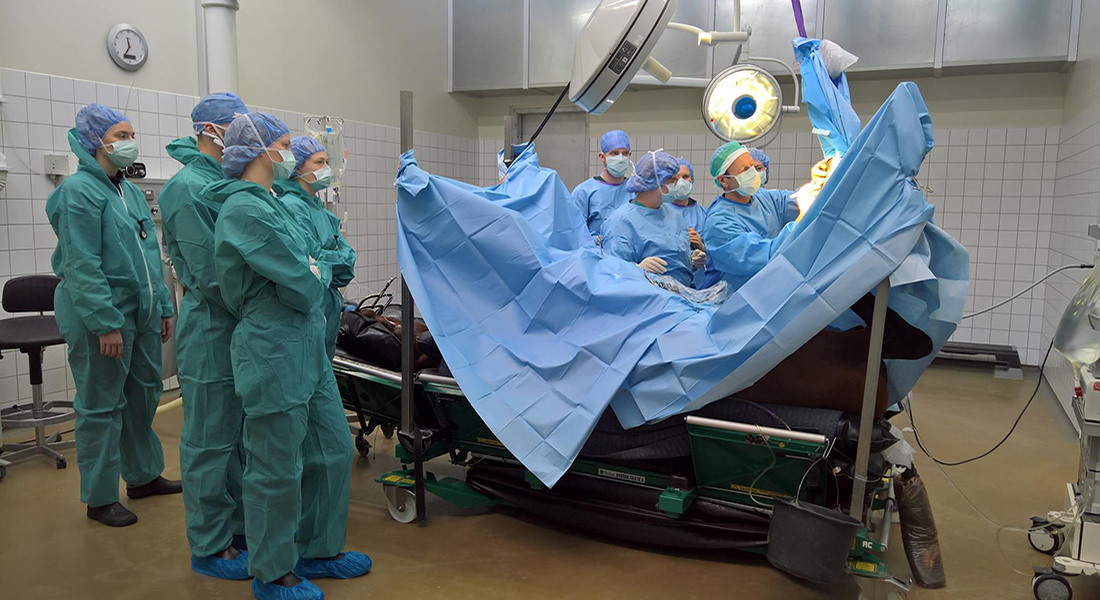
The Section for Medicine, Surgery, and Reproduction in Large Animals conducts both basic and applied research on medical and surgical diseases and the health of large animals, namely horses, cattle, sheep, goats, pigs, and, to a lesser extent, exotic animal species.
Large animal medicine
Big animal surgery
Research group leader: Stine Jacobsen
Cattle and VRO
Research group leader: Jørgen Steen Agerholm
Research
Understanding Disease Processes
The section’s research focuses on understanding disease processes, including inflammatory reactions and their impact on animal welfare and disease.
We also work with objective measurement methods to detect diseases in animals, such as lameness. In addition, we focus on diseases arising from intensive animal husbandry and from physical exercise in animals.
Furthermore, we work on hygiene principles and infection control between animals and humans; minimising antibiotic use and the development of antibiotic resistance are part of our research efforts.
Finally, we also conduct research on the use of translational animal models—that is, research on animals with diseases that are also found in humans, where transdisciplinary research can contribute to knowledge and understanding of human diseases.
Clinical Consultation
Dialogue with Veterinarians and Pet Owners
The section maintains close dialogue and collaboration with practicing veterinarians throughout the country, who often refer animals to the University Hospital for further evaluation. At the same time, we also maintain close contact with pet owners in connection with the admission of animals to the University Hospital.
Teaching
The section teaches veterinary students from their third year of study through graduation. Teaching constitutes a very large part of our work, and we provide both theoretical instruction—such as lectures, seminars, and written assignments—and student supervision, as well as practical training.
Practical instruction takes place primarily at the University Hospital in Tåstrup, where cattle, horses, sheep, goats, and pigs are used in the teaching. We also conduct teaching activities off-campus at livestock herds throughout the country.
In addition, we offer a number of e-learning modules as well as a “skills lab,” where students can practice practical procedures on animated animal models.
|
|
Section leaderRikke Buhl |
EC Cardiac Group

ECG's primary goal is to advance research in equine cardiology and to explore the potential of using the horse's heart as a model for the human heart.
Researchers
This content is temporarily unavailable because the system it is fetched from cannot be reached. The rest of the site works as usual.
Status is available on the operating status page.