
Veterinary Clinical Pathology and the Veterinary Diagnostic Laboratory
Veterinary Clinical Pathology (VKP) is the discipline that deals with the analysis of biological samples taken from live animals. The analyses are carried out at the Veterinary Diagnostic Laboratory (VETLAB), which is located at Dyrlægevej 46, Frederiksberg campus.
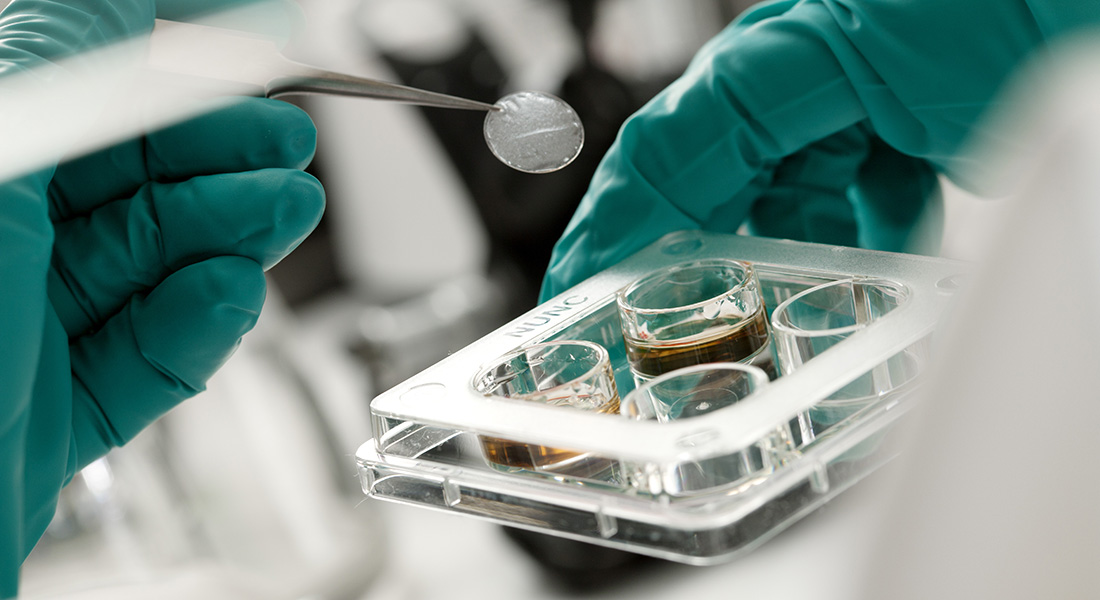
We carry out commissioned research and diagnostics for researchers at and outside the University of Copenhagen, practising vets, as well as for the University Hospital for Companion Animals and the University Hospital for Large Animals.
Within our field of research, we focus on identifying and validating diagnostic and prognostic biomarkers for acute and chronic diseases in animals, as well as on the pathobiological understanding of diseases, particularly within the haemostatic and immunological systems.
Veterinary Clinical Pathology is, by its very nature, an interdisciplinary field of research in which we collaborate with a range of different research groups, both nationally and internationally. We share our research findings in scientific forums such as the European Society of Veterinary Clinical Pathology (ECVCP), the European Society of Veterinary Internal Medicine (ESVIM) and the International Society of Animal Clinical Pathology (ISACP), as well as through scientific publications.
We teach evidence- and research-based courses to veterinary students, veterinary nursing students and veterinary laboratory technicians, and provide continuing professional development for practising and specialist vets and veterinary nurses in practical clinical pathology skills.
Gastrointestinal disorders are very common in dogs and cats. Unfortunately, the diagnostic process is extensive and potentially invasive. We are therefore working to develop minimally invasive diagnostic and prognostic biomarkers for the benefit of dogs, cats and their owners.
Gastrointestinal biomarkers in dogs and cats
We are working with both protein-based and genetic biomarkers to identify specific gastrointestinal diseases in dogs and cats, and also to distinguish between inflammation and, for example, cancer. Our aim is to identify less invasive, and ideally earlier, biomarkers for this.
Ongoing projects
- microRNA and mRNA analyses in tissue samples from dogs with chronic inflammatory enteropathy and cancer
- Evaluation of serial microRNA levels in serum and faeces in dogs with gastrointestinal cancer
- Faecal bile acids in cats with chronic enteropathy and gastrointestinal cancer
- Serum 25-hydroxyvitamin D3 in dogs with acute and chronic enteropathy
- Faecal transplantation in dogs and cats with chronic enteropathy
Previous projects
- Serum and faecal microRNA as markers for gastrointestinal cancer in dogs and cats
- Myeloperoxidase as a marker of inflammation in dogs with enteropathy
We develop and validate various new diagnostic assays for the diagnosis of inflammation in different species, primarily using automated instruments (Atellica CH, Immulite, Minicab, ACLTop and Advia 2120i) as well as enzyme-linked immunosorbent assays (ELISA).
Our aim is to ensure the reliability of clinical pathological biomarkers for various species. In addition to continuing this work in-house for our diagnostic tests at VETLAB, we also undertake this type of work in collaborative projects.
Ongoing projects
- Validity studies and observer variability in the interpretation of protein electrophoresis in dogs
- Mast cell identification in bronchoalveolar lavage (BAL) in horses
- Simplification of the faecal sedimentation technique in dogs with Angiostrongylus vasorum
- Investigation of serum amyloid A and C-reactive protein as supplementary markers of inflammation in dogs
We conduct research into and work with a range of different analyses within the field of haemostasis, such as thromboelastography, thrombin generation testing, haematology, platelet aggregation, activated partial thromboplastin time (aPTT), prothrombin time (PT), von Willebrand antigen testing and D-dimer levels.
For many years, we have been researching haemostatic changes in dogs, cats, horses and other animals in connection with various chronic diseases. We have a very well-equipped haemostasis laboratory which also supports the two affiliated veterinary hospitals.
Ongoing projects
- Prevalence and prognostic factors for immune-mediated haemolytic anaemia in dogs in Denmark
- The pathobiological understanding of immune thrombocytopenia in dogs
- Development, identification and therapeutic management of haemostatic dysfunction in dogs with Angiostrongylus vasorum
- Hypocoagulability in cats with arterial thrombi
- Understanding of inflammasome proteins in prenatal piglets
- C-reactive protein in dogs with hypoadrenocorticism (Addison’s disease)
Contact
Research group leader
Anne Kirstine Havnsøe Krogh
Veterinarian, Teaching Associate Professor
Telephone: +45 35 33 09 42
Email: akrk@sund.ku.dk